
Read the Transcript
Sonship: Children of God vs. Sons of God
If you would turn with me to that passage that we read yesterday afternoon in the letter of the apostle Paul to the Romans and Chapter 8, the eighth chapter of the Roman letter. And I'm going to read from verse 14.
For as many as are led by the Spirit of God, these are sons of God. For ye received not the spirit of bondage again unto fear, but ye received the spirit of adoption, whereby we cry, Abba, Father. The Spirit himself beareth witness with our spirit that we are children of God. And if children, then heirs, heirs of God, and joint heirs with Christ. If so be that we suffer with him, that we may be also glorified with him.
And then I would like to add to that in the Hebrew letter, the letter to the Hebrews, chapter three. And I'm going to read from verse six.
But Christ as a son over God's house. Whose house are we if we hold fast our boldness and the glorying of our hope firm unto the end? Wherefore, even as the Holy Spirit saith today, if ye shall hear his voice, harden not your hearts as in the provocation, like as in the day of the trial in the wilderness, where your fathers tried me by proving me, and saw my works 40 years wherefore, I was displeased with this generation, and said, they do always err in their heart. But they did not know my ways, as I swear in my wrath, they shall not enter into my rest. Take heed, brethren, lest haply there shall be in any one of you an evil heart of unbelief in falling away from the living God.
In the same letter, chapter 12, I'm going to read from verse five.
And ye have forgotten the exhortation which reasons with you as with sons, my son, regard not lightly the chastening of the Lord, nor faint when thou art reproved of him. For whom the Lord loveth, he chasteneth and scourgeth every son whom he receiveth. It is for chastening that ye endure. God dealeth with you as with sons; for what son is there whom his Father chasteneth not? But if ye are without chastening, whereof all have been made partakers, then are ye bastards and not sons. Furthermore, we had the fathers of our flesh to chasten us, and we gave them reverence. Shall we not much rather be in subjection unto the Father of spirits and live for they indeed for a few days chastened us as seemed good to them. But he for our profit, that we may be partakers of his holiness. All chastening seemeth for the present to be not joyous, but grievous, yet afterward it yieldeth peaceable fruit unto them that have been exercised thereby, even the fruit of righteousness. Wherefore, lift up the hands that hang down on the palsied knees and make straight paths for your feet, that that which is lame be not turned out of the way, but rather be healed.
Shall we just bow together in a further word of prayer?
Beloved Lord, we are so thankful when we come to the ministry of your Word that you make specific, specific provision for us in every aspect of our gathering. We thank you, Lord, that you have, through the finished work of our Lord Jesus, provided us with an anointing for both the speaking of the Word, the translating of the Word, and the hearing of the Word. We do not, Lord, want to be left to our own energies and our own gifts or talents, whatever they may be. But we want, Lord, to avail ourselves of that anointing, grace and power. For this afternoon we stand by faith into it. We appropriate that anointing in its fullness for this time, Lord. You know these afternoon times can be difficult times, especially with heat. But we want, Lord, to praise you that you're able, as it were, to revive and renew and quicken us all that we may be able to receive from you. Hear us, Lord. We shall be careful to give you the praise and the glory for answering this our prayer, which we ask in the name of our Lord Jesus, the Messiah. Amen.
Understanding Sons and Children
Well, I've been asked to speak to you in these two afternoon sessions on sonship, and I have already sought to open up a little bit of this subject. Yesterday when we talked about sonship, the King James Version, the old King James Version, actually made no distinction between these two Greek words, huios and tekna, one meaning sons, the other meaning children. But they interchangeably translated them, sometimes using tekna for sons and huios for children. And the result is that you do not get a clear understanding of what the Holy Spirit is really saying. But I hope that it became a little clearer to you after yesterday afternoon.
Greek Words for Family Relationship:
Tekna (children): Refers to your relationship to the Lord—being born of Him, born into His family through the work of Christ on the cross.
Huios (sons): Refers to growing up to take your place in the household of faith—spiritual maturity and responsibility.
I hope you are not more confused and muddled than ever on this matter of sonship. We are all children of God if we have been saved by the grace of God. We are all born of the Spirit of God, and we are all sons. But to be a real son, we have to grow up. When someone speaks of my child, normally you think of that one as young, as small, a child. My child. My child does this. I feel this about my child. But when you say my son, your son could be 70 years of age and you could be 90. You're speaking of someone who's grown up. Of course, you can speak of a little baby as your son. My son is just born a few weeks ago, you might say, and you are perfectly right. But when the scripture uses these two words, it uses it with very real significance.
Children, the word tekna in Greek is really to do with your relationship to the Lord. You are born of him. You are born into his family. You are born of his work, the work of our Lord Jesus on the cross. When it speaks of sons, huios, it normally is always thinking of you growing up to take your place in the household of faith. Now, the biggest problem we have amongst Christians today is we have millions and millions of babies and very few who have grown up to take their place as sons.
The Inheritance of Sons
I want to talk a little bit more about this whole matter of sonship, a little more in detail about it. Whenever you have the word son or sons, normally in view is the inheritance which is ours. Growing up to possess our inheritance, growing up to take our place in the church of God, in the house of God, in the household of faith, growing up to become responsible. Growing up in a way that means that we can contribute something to the fulfillment of God's purpose.
There are some wonderful words in the scripture about our inheritance, and it might be good if we were just to look at them. The first you will find in the first letter of the Apostle Peter, chapter one, and I will just read from verse three.
Blessed be the God and Father of our Lord Jesus Christ, who according to his great mercy, begat us again unto a living hope by the resurrection of Jesus Christ from the dead unto an inheritance incorruptible, undefiled, and that fadeth not away, reserved in heaven for you, who by the power of God are guarded through faith unto a salvation ready to be revealed in the last time.
Now, isn't that wonderful? You have been born again to an inheritance, an incorruptible inheritance that is an inheritance that doesn't deteriorate, that doesn't grow less. It is an inheritance that is incorruptible. It doesn't fade away, it doesn't disappear through use. It is something tremendous that you have been given.
Now, most of us who are children of God here today are quite clear that we've been born again. We know this word has been devalued in the American media. We hear all the time about someone who's born again, so someone else is born again. I sometimes wonder whether it really is a real new birth. Many people are converted in the head and not born of God.
The Evidence of New Birth
When a person is born of God, two or three things immediately happen. First of all, their eyes open and they begin to see. That's the first thing. The second thing is they begin to breathe. That's the second thing. The third thing is they get hungry and they want to drink and they want to eat, however unsolid the food is.
When a person is born again, the first thing that happens is they become aware of the Lord Jesus. With the eye of the faith, they begin to see Him. There's all the difference between being converted in the head—second hand, second generation Christians—it's all up here. They've got it up here. But nothing has ever happened in the heart. When you're born again, you begin to see the Lord. Not with these eyes, these physical eyes, but with the eye of the heart, there is illumination. And as you walk with him, that illumination grows. You begin to breathe by the Spirit. That's the only way you can grow by the Spirit of God, you breathe, you begin to want to feed.
When people don't want to come to a Bible study, not interested in reading the Word, I think they're converted up here, but they're not born again. When you're born again, you have a hunger, a hunger for the Lord. You want to feed, you want to digest, as it were. And then there is yet another thing. When you are truly born, you want fellowship. You need your mother, you need your father, you need to be nursed, you need people around you. That's why you can wail so well. It is to let everybody know that you're there and that you need some kind of fellowship. It's on a very poor level when we're babies, but it's nevertheless a very real level.
Now, when people have no desire for fellowship and no desire for the word of God and no desire to get to know the Lord better, something's wrong. No wonder people remain dwarfed and stunted. But when you're born again, something wonderful has happened. Now we have been born again through the resurrection of the Lord Jesus. That is his life. We've been justified by his death, our sins cancelled, blotted out like a thick cloud. We stand before him, clothed in the righteousness—before God, clothed in the righteousness of the Lord Jesus. But by his resurrection we are born again. We have actually been born anew.
And I imagine most people here know they're born again. But do you know that you're born again to an inheritance incorruptible, undefiled, and that fadeth not away? And do you know that you can be guarded by the power of God through faith, so that that inheritance you will be able to possess?
And I think it's a wonderful thing. When you look at it again, there's another scripture I'd like to turn you to. And it is in Acts, chapter 20. And it is verse 32. Acts, chapter 20 and verse 32. And this is how it reads. And now these are the words of the apostle Paul.
And now I commend you to God and to the word of his grace, which is able to build you up and to give you the inheritance among all them that are sanctified.
To give you the inheritance among all them that are sanctified. And lastly, in this matter of inheritance, I'd like you to turn to the Hebrew letter again, chapter 2, verse 10. And this is how it reads:
For it became him, for whom are all things and through whom are all things, in bringing many sons unto glory, to make the author of their salvation perfect through suffering.
Bringing many sons unto glory. It could have easily said bringing many children to glory, but then we would have missed the point. It's not bringing many saved people to glory. It is bringing many sons to glory, those who are born of the Spirit and who have grown up in the Lord.
Four Absolute Necessities for Growing to Sonship
I would like this afternoon, if you can remain awake, to look at four matters that I believe are absolute necessities if we are going to grow up to be sons in the house of God.
1. Growth to Maturity
The first is growth to maturity. It is an absolute necessity that we should grow. We do not—when we are saved, we do not—we are not sort of adults immediately. We are just like it is in the natural world. We are babies. Our eyes have only just opened, our ears only just hear. We have lungs because we breathe. And we're able to make a colossal amount of noise in order to get attention. We are babes. We need to be fed, but we can't be fed on steak. We can't be fed even on those dreadful McDonald's hamburgers.
We're two little tiny babies. We cannot digest such a thing. We had to have food suitable to our bodies. We hadn't got teeth. We are so small that we can hardly really—we hadn't got teeth that are the kind of teeth that can chew properly. We are babes.
That's a marvelous stage to be when it is the proper time. But when, as I said yesterday, you are in that stage when you're 20 years old in the Lord, 40 years old in the Lord, 50 years old in the Lord, it is a tragedy. You have lungs that can cry because you want attention all the time. You're screaming for everybody to come around you. You are like a whirlpool. You suck everybody into the whirlpool. Your needs are the biggest problem in the church. They need to be met. Everyone is there for you. Everyone is there for you. Whoever preaches is there for you. The brothers are there for you. The sisters are there for you. Everyone is there for you.
This is babyhood. There's nothing wrong with this kind of babyhood when you're at the proper stage, when it's the right time. But when you are 10 years old in the Lord, you should be beginning to grow up. You should be beginning for the first time to think about your younger brothers and sisters. When you get to 20 years of age, you should be even more responsible. When you're 30, even more responsible. Where are the sons?
The tragedy in the church today is we're all babies and children and no sons. Oh, yes, they're sons, but they can't take responsibility. They can't shoulder duties. They can't lay down their lives. You don't expect a little baby to lay down its life, do you? What an extraordinary thing it would be, a newborn baby. And you said you have to lay down your life. Of course not, a little baby. It's only right that it should be cuddled and nursed and loved and listened to.
A Personal Story of Childish Self-Centeredness
I was a terrible child when I was young. My mother had an awful time having me for a start. However, she forgave me for that. I had a very big head, and that meant that—and I've always had one—and it meant that she had a very, very difficult birth. But the interesting thing is that when I was beginning to come into this world, I used to cry and cry and cry. My mother didn't know what to do. It didn't matter if she rocked me, cradled me, spoke to me. I went on crying and crying and crying. And finally she went to a doctor who sent her to the specialist because he thought there must be something dreadfully wrong with this little baby.
And the specialist said, Mrs. Lambert, there is nothing wrong with this boy at all. He is strong willed. She said, he will cry and cry because he wants something. And until you give him that, he will go on crying. Put him in the pram. We lived in a very big house with a very big Garden yard, I think you say. Wheel him right down to the end of the yard and leave him there.
And my mother did precisely that, that she took me, wheeled me down and left me there. And I wailed and wailed and wailed until various neighbours would either phone up or come right round and bang on the front door and say, oh, Mrs. Lambert, your little child is crying dreadfully. My mother got so fed up with it, she felt all the neighbors were in league with her little son.
There was no good saying to me, lay down your life, Lance. That was the stage in which I was. I was expressing something. I was expressing myself, I was expressing my needs. I was expressing my will. I was expressing, I suppose, my emotions. If you'd said to me, lay down your life, I wouldn't have known what you were talking about. And anyway, it wouldn't have been right. Only when you start to grow up do you have to think of others. Then comes the challenge. You have to lay down your life.
The Problem of Perpetual Spiritual Infancy
I don't know how clearly I can get this over to you, but there is such a thing as babyhood. It is the nursery, it is the cradle. It's been carried in arms. It's a question of—now, I don't know these terms in American English—rattles, dummies and little toys. I think you say comforters for dummies. When you say someone's a dummy, I believe you mean something else. But dummies, rattles, you know that. Well, I mean, here he is, a little baby, and you give it a rattle and he plays with it. They're very happy. You have a little thing across with something that dances up and down. The baby's very happy.
I mean, it's just exactly what we—at the stage, we are in the church, we have to give them all the rattles and pacifiers to keep them quiet. Put it in their mouth, keep them quiet, rock them backwards and forwards. But when they're 30, 40 years old in the Lord, it's a tragedy. They should be now taking responsibility in the household of faith. But instead, an inordinate amount of time has to be spent upon us because we have not grown.
There is a place for the nursery. There is a place for being carried. There is a place for rattles and pacifiers and little toys. As we say, little things please little minds, but if they keep the little one happy, it's fulfilled the objective. But we're never meant to stay there. The greatest problem we have in the house of God today is that we have thousands and thousands of dwarfed, stunted children. They have never grown, they have never grown up, they never come to maturity and therefore they can never take responsibility in the things of God. I say this is a tragedy.
Children by nature are self centered in a beautiful way. When we were young, generally speaking, we thought a precocious child rather beautiful. The child comes over with its drawings and shoves them on your lap. No matter if you're talking about the deepest things in the world with another believer, the child has come with their drawing and they want you to see their drawing. It's not evil self centeredness. It is natural self centeredness. It's beautiful when it's at the right time. But when someone 25 years of age shoves a picture in front of you that they have done and stops you from being able to talk with someone else, there's something ugly about it, you understand? I hope I'm not being too coarse.
When you're a child, you have limited ability. There are a whole number of things you cannot do. It's only when you grow up that you can start to really do things. You have limitless ability. There is all the possibility of the using your ability for others and so on. Well, I only want to point out to you that you have something tremendous here that you and I need to consider. Am I growing? Are you growing? Have you stopped growing? Can you put your finger on when you stopped growing? Because if you can, you will know that there was some issue that you didn't settle and on that issue you stopped growing. In other words, if you can settle the issue, you can start to grow again.
Biblical Foundations for Spiritual Growth
Take for instance some of the scriptures very quickly. Let's just take a quick sort of tour through a number of scriptures. One Peter, chapter two and verse one and two:
Putting away therefore all wickedness and all guile and hypocrisies and envies and all evil speakings as newborn babes long for the spiritual milk which is without guile, that ye may grow thereby unto salvation.
Now isn't that wonderful? Long as newborn babes for the spiritual milk which is without guile, that ye may grow unto salvation. What does this mean? It simply means not that you haven't got a salvation, you have a salvation if you're a newborn baby, but that you may possess your salvation.
It's like the children of Israel on the wrong side of the river Jordan, singing about it, praying about it, studying it and everything else. They never go over and possess. You have to go over and possess the land and wherever you put your feet down that is yours. When you claim it, it becomes yours. So it is with your so great salvation. It's all yours. But you have to possess it. Now. You cannot possess it if you have no muscle. If you're so weak, you need spiritual milk so that you grow. And as you grow you can stand, and then you can walk, and then you can run. Then you can possess your so great salvation.
I cannot spend too long on this. But it is tremendous, I think, just to think about it as newborn babes desire. Or long for the spiritual milk which is without guile, that ye may grow thereby unto salvation. Or again, if you have your Bible with you, 2 Peter, chapter 3 and verse 18:
But grow in grace and in the knowledge of our Lord and Savior Jesus Christ.
Not knowledge about him, but knowledge of him that is growing your knowing of him. Get to know him. Grow in grace. You cannot grow any other way. The only way you can grow is by the grace of God. But as you take step after step by faith, so you grow in your knowing of the Lord Jesus.
Or again, Hebrews and chapter 5, Hebrews chapter 5 and verse 11:
Of whom we have many things to say, and hard of interpretation, seeing ye are become dull of hearing.
So often we become dull of hearing. I have a hearing problem now. And when people don't speak clearly, I can't hear them. And some of them, it's unbelievable number of people that don't speak clearly. And I'm supposed to understand that you can't even read their lips. Some people don't use their lips. Especially men, they don't use their lips. I suppose they do in some ways, but I mean, they certainly don't when it comes to speaking. Dull of hearing. Listen, it gets worse:
For when by reason of time ye ought to be teachers, ye have need again that someone teach you the rudiments of the first principles of the oracles of God, and are become such as have need of milk and not of solid food. For everyone that partaketh of milk is without experience of the word of righteousness, for he is a babe.
A babe cannot have much experience. The only experience a babe has is being born. You can't have too much experience when you're a baby. And so the apostle or whoever it is, probably Apollos, I think, says here:
For everyone that partaketh of milk is without experience of the word of righteousness, for he is a babe. But solid food is for full grown men, even those who by reason of use have their senses exercised to discern good and evil.
Sons, sons. They had learned to discern between good and evil in the right way by the Spirit of God.
Well, I want just only to give these things to you. I think they're tremendous. If someone says, but can we ever become full grown down here? Well, the Apostle Paul said so. He said in 1 Corinthians 2 and verse 6, he says, we speak wisdom amongst those who are full grown. And in another place In Philippians chapter 3 and verse 15, he says, I better quote it so I don't misquote it. Read it to you. In Philippians 3 and verse 15, he says:
Let us therefore, as many as are full grown, be thus minded. And if in anything ye are otherwise minded, this also shall God reveal unto you. Only whereunto we have attained, by that same rule, let us walk.
So you can come to full growth. Not to perfection, but to full growth. That is, you can come to maturity. It's a goal. That's what it means to be a son in the house of God.
The Corporate Dimension of Spiritual Growth
There is also one other thing in this matter of spiritual growth to maturity that I think I ought to underline, and that is there is a corporate dimension. Sometimes people think they can grow alone without other believers. It is impossible if you read in the word of God again in Ephesians 4, verse 15:
But speaking truth in love may grow up in all things into him who is the head, even Christ.
Now, isn't that an interesting phrase? May grow up in all things. In all things. No single aspect of our life in which we can't grow up into Christ as head. But whenever you have the head, this word head, in the word of God, you have the body. And if you read the next verse, that's exactly what it goes on to say. It says:
From whom all the body fitly framed and knit together through that which every joint supplies...increaseth with the increase of God.
In other words, as you grow up, you need your brothers and sisters. Now, how do we find our brothers and sisters? Not by trying to be one with them. We find it by growing up into the head. When we are growing up into the head in all things, we discover the body. Do you understand? We don't discover the body by trying to find brothers and sisters. We discover the body and experience the body by growing up into Christ as head.
He's my head. Do you have another head? No. You have the same head. Do you have another head? No. You have the same head. That means three of us have the same head. If we're growing up into the same head, we're going to find each other in the Lord. Then we maintain the unity of the Spirit in the bond of peace.
I will not spend too long on it, but it is tremendous. I must say again, listen to this. In Ephesians chapter 2 and verse 21:
In whom the whole building fitly framed together groweth into a holy temple in the Lord, in whom ye also are builded together for a habitation of God in the Spirit.
So here you've got something very wonderful. There is a corporate dimension to this. Each one of us has to grow personally, individually. You cannot grow by proxy. Some people think, oh, if I belong to such and such a company, I will grow spiritually. You'll only grow spiritually if you take in from the Lord what the Lord is saying and obey it. Then you will grow.
But you won't grow by sitting in the midst of other people who deeply know the Lord. That's a mistake. What happens is you take on what they are saying and the teaching and it looks as if you are at the same level as they until the storm comes. Then when the storm comes, it sweeps away a whole lot because it never was inside. You can't hide in the corporate. Each one of us has to grow individually, personally, and we have to grow up into him as head. Then we have a fellowship of saints that is strong in the Lord. They each one have their own experience of the Lord. Each one is directly related to the Lord as head, and therefore they discover one another.
Well, that's all I want to say about the matter of spiritual growth unto maturity. It is an absolute necessity.
2. Training and Discipline
Here is the next necessity. Training and discipline. It is an absolute necessity. No one will ever become a son in the house of God, in the household of faith who does not accept training and is not subject to discipline. It is a vitally important part of growing up to be a son.
We have all observed and suffered children who have had no discipline or training. Of course, it's not your children, but we've all observed and suffered and we have seen the tragedies as people grow up into teens and into twenties when there's never been any training or any discipline. It is a sad observation to make of all life.
Listen, I say it again. All life has to be pruned and it has to be trained. Discipline, training. Any of you who are gardeners know exactly what I'm talking about. Any of you who are farmers will know what I'm talking about.
The Principle of Pruning
I have one or two trees. For some reason or other, they got ill at one point and instead of growing properly, there was a whole bald patch like that. Well, you know, when you planted a tree, you get very upset about digging it up. You think you planted it. Well, I have an affection for the thing. I don't know about you, but I sort of think, surely it's going to live. But it doesn't. Then some dear old brother said to me, you have to cut it right down. Oh, I thought that was a terrible thing to do. Cut it right. And yes, cut it right down. Right down to where the green is at the bottom of the. Oh, I went through such agonies over that, and finally I thought, that silly tree is doing nothing. So I cut it and it blossomed. It went bananas.
You know, the Lord looks at you sometimes. You've had a drought in your life or something that's gone wrong. You've made a big mistake, you have a fault, you have sinned, and there is—it's very apparent in your growth. And the Lord comes and says, we're going to have to cut this right down. We think it's the end when the Lord cuts us down like that. Actually, it is a new beginning. It is amazing how quickly the tree grows once it's been so severely dealt with.
Well, no doubt some of you can give me amazing experiences of this with plants that for some reason didn't do well, and so on. And then someone who knew better said to you, cut it right back. And you thought, I never—I can't do that. But when you did, it became so full of new growth and so full of blossom. It is so with fruit. When a fruit tree becomes, or certainly vines become too old, they don't bear the same amount of fruit. You have to prune them. And if you prune them correctly, they bear more and more and more exactly what the Lord Jesus said in John chapter 15. We don't like pruning.
The Modern Desire for Instant Results
We want a shortcut, if we can, to fruitfulness. We want a shortcut to usefulness. If we could only have some enormous experience that would blow us into fruitfulness and usefulness without us having to suffer at all overnight. The thing is done. You know, here in the States, everything has to be instant. It's getting that way all over the world now due to good American businessmen, you know, everything is instant cream, instant this, instant that instant the other. Don't need to take time or trouble. Why not go as quickly as you can get the thing done. And so we have instant salvation and instant holiness and instant usefulness and instant power and instant everything else in the church.
I am all for real experience of the Lord. I have absolutely no doubt that there is an experience of the cross which is a definite experience of the cross, of laying down your life. But then it can lead to tremendous usefulness and fruitfulness. But sometimes there's a long path up to the point where you have the experience and certainly afterwards. And it's the same with the baptism of the Spirit. People always say, oh, I need an experience of the Holy Spirit. But they want an experience of the Holy Spirit that will certainly make them wonderful people, useful people. I thank God for any experience of the Holy Spirit. I would never, never despise such experiences of the Holy Spirit. It comes into the category of quenching the Spirit or grieving the Spirit when it really is the Spirit.
But, my dear child of God, the greatest experience of the Holy Spirit will never make you an instant servant of God. Paul had a tremendous experience, but he had to go for three years into the desert. What happened in three years, we really don't know. All we know is the fruit of it. We see it in the revelation he had, the understanding he had and the ministry he had, which is with us to this day. Pruning.
Oh, we don't like that. When we see the Lord coming with pruning clippers, we prefer to be babies. Then he comes to cuddle us and rock us and give us our rattles and pacifiers and our little toys. But when he comes with clippers, we don't like it. Yet this training and pruning is absolutely essential if you're going to be a son.
Training for Special Service
I see that Prince William, who is the crown prince in the British royal family, is now going to go into the military. Has to be a training. If you're called to special service, there has to be special training. If you're someone marked out by God for a special ministry and a special work, you will have a special training. The greater your ministry will be, the greater the training and pruning will be.
Now, we read that passage in Hebrews chapter 12, didn't we, about chastening. Chastisement. Chastening? No. Chastening seems good, but grievous at the time it says, I always remember, dear Brother Sparks. For me, it was an eye opener. When he said, I think we need to rewrite this, he said, because the Greek is literally child training.
Understanding "Chastening": The Greek word translated "chastening" in Hebrews 12 literally means "child training." This transforms our understanding from punishment to purposeful development—God training His children for maturity and responsibility.
Now, when you think of it like that, it takes all the sting out of it. You see, we think of chastisement as someone coming with birch broom, you know, to beat us or a whip or to take the belt off, you know, and sort of give us what for. Mind you, I always feel that when I go to Finland. I've never seen a nation. I hope there are no Finns here like the Finns. I mean that sauna they have where they cook you till you drip and then out you come and you're rubbed with sailcloth so it nearly takes your skin off and then in and out again and plunged into ice water and then beaten with birch twigs. And then they said to me, we never get colds in Finland. I should think not everyone who was weak died when they were young. I should think now, forgive me if anyone here is Finnish. It's a marvelous thing, of course, but I mean, nobody thinks, oh, how wonderful it is. The Lord is coming with a chastening rod. The Lord is coming with this thing of birch twigs to beat us, rub us with a sailcloth.
A Childhood Memory of Training
Child training. No, child training seems to be joyous, but grievous. Absolutely right. I remember the times I was chastised. I didn't find it at all joyful. I was no believer then, but if I had been, I would have prayed for my mother's immediate entry into the kingdom. And I always remember to this day how lovely it was when I was a child and before I went to school and was able just to sit in the garden looking at bees sometimes taking their wings off. That's the kind of thing we do when we're kids. Dreadful. It was lovely to wander around chasing the cat, making the dog's life a misery.
And then one day Mother said, you're coming with me. And I thought we were going—I said, where are we going? Mother said, you'll see. She knew very well. No point telling me otherwise. I would have been absolutely in a tantrum. But we went off to this place and there Mother stood, she rang the bell. And this lady that was the nearest thing I'd ever seen to God, came to the door. She was a very marvelous lady with a straight back and a huge, huge...steel grey hair and blue eyes. And she looked at my mother and mother said, this is Lance, Ms. Day. And Ms. Day said, come, Lance, you are coming to school.
Well, I didn't want to go to school, so I immediately drew back. Mother pushed me. Ms. Day looked at me in a stern...and I remember my mother saying to her, miss Day, we don't want him to be in prayers. And I remember Ms. Day saying, Mrs. Lambert, two minutes on our knees before the Almighty cannot possibly harm a child. I remember that very well.
Anyway, I vanished in tears and everything else. It didn't matter now. My life was totally different now. Child training had properly begun. I couldn't just wander around looking anymore. I had to sit in a desk and listen. I found it very difficult. And although this has nothing to do with the message to this day, to this day, I still remember Ms. Day. She was the first person I ever heard Bible stories from. And to this day, I still remember, because the first story I ever heard in my life was the story of Jacob.
And when Ms. Day prayed, this lady that I felt was basically more Pope, more of a Pope than the Pope, she knelt on the wooden floor, and I thought to myself, who in the world is she talking to? Because she was, to me, the biggest authority I had ever seen. She actually quelled my mother, and that was something incredible in my eyes. And she knelt there on the wooden floor, and we all had to kneel, of course, beside our desks while she talked to somebody. Never forgotten it.
The Cultural Resistance to Discipline
We don't like it when God takes us into training. We all want to get to the end of the training and get the prize, but none of us like the training. We don't like the discipline. But the Lord says, every son, not every child, every son whom he receives, he scourges. Oh, it seems so foreign in 2003. Scourges. Every son whom he receives. Apparently, this kind of training is absolutely necessary if a son is to become responsible in the things of God. Well, I have to leave it, because otherwise we'll never finish. And I don't know, I have to watch myself on time always. But I think this matter of training and discipline is absolutely essential.
What is wrong with us believers? I think we've been infected by a virus that is in the world. The virus that is in the world is pleasure seeking. We don't want anything tough anymore. We don't want anything hard anymore. We don't want anything that hurts anymore. We want everything that is a shortcut, everything that is instant, everything that is easy, and it's got into the house of God so that really, we don't really want anything that has some discipline in it.
The Spheres of Divine Training
Training and discipline. Someone may say to me, well, how is this discipline applied in relationships? Very often? Relationships? Oh, you say as a stranger. No, no, no. In your home, at your work and in the church. Isn't it interesting how much of the New Testament letters are taken up with husbands and wives and parents and children. Employers and employees have noticed it as well as the Church. It's all to do with discipline. Obey your parents in the Lord, just as an example. Relationships. Very hard sometimes to have the right relationships to parents, right relationships to children. Right relationships to husband. Right relationships to wife. Right relationships to your employer or those over you. Right relationship to those who are under you and working for you. And in the Church, what a field day the powers of darkness sometimes have in the Church. Relationships. Training comes through relationships. Having to be bound together, having to go through together, having to maintain the unity of the Spirit. It is no easy matter.
Well, I leave it with you. But it's tremendous. Another way that the Lord uses for training and discipline is circumstances. It's not just relationships. It's circumstances. Sometimes we lose our job. Sometimes we find ourselves in unbelievable circumstances. Sometimes it's our own making, sometimes it's not. But those circumstances become the means of discipline and pruning.
Inexplicable Problems as Divine Training
There is one other way the Lord uses. I pray that it may not be for too many here. But it is what I call inexplicable problems. Why does the Lord entrust some people with the most terrible problem? A child that cannot grow up properly, an accident that leaves you disabled for life, a barrenness that means you cannot have children. Why? Why does the Lord do it? I sometimes think it is because there is a very special calling. And the training is therefore the more severe because the calling is so great. Think about it.
Amy Carmichael had no idea in the day that she went to look at a new property not far from Dohnavur in southern India. Had no idea that that day was to change her life and the direction of her ministry. Many of you will know the story. They went to see this new property. The person who should have come didn't come. Typical of our part of the world. An hour or two went by. The tropical dusk fell. Finally he came with the key. When he opened the door, coolies had dug a huge ditch where they were not supposed to dug a ditch. Everyone stood aside for Amy Carmichael to walk. She walked in, fell into the ditch, broke her ankle and her hip, and in great pain was pulled out of the ditch into the jeep and bumped over roads, 20, 30 miles or more of roads to a hospital. Place it. You'll be all right. She'll be all right. She had no idea she'd never walk again.
Dear Amy Carmichael who—I remember Lady Ogle saying her memories of Amy Carmichael were the hair streaming out behind her in her sari, running between the children's houses, so quick, so sensitive, so amazingly thoughtful. She wrote a poem, Rose from Briar. She wrote a book, actually, and a poem, Rose from Briar. She named the book Rose from Briar. And in it she said, I'm so sorry that I'm writing this book because I'm only here for a month with my leg up. But I'd learned so much of the Lord in this time. She had no idea that it would be 25, 27 years that she would be on her back. But then came a ministry that would never have come to the church. For she wrote book after book, and it was like deep calling to deep. There's nothing that can help people who are suffering from the inexplicable like Amy Carmichael's ministry, Inexplicable.
Well, I must go on, otherwise I'll never finish.
3. Education by the Holy Spirit
Education is the third absolute necessity. You can't become a son without education. Can you think of it? Someone being trained for service and no education. Of course, it's absolute nonsense. You must have education. It is an absolute necessity. And this is the Holy Spirit's work. Jesus said, when he has come, he will teach you all things. He will teach you all things. Are you a stranger to the work of the Holy Spirit? It is a tremendous thing to know the ministry of the Holy Spirit. Always unveiling the Lord Jesus to us, always directing our gaze to the Lord Jesus, always taking of the things of the Lord Jesus and making them real in us. It is the work of the Holy Spirit. He is the teacher.
He, if you like, is the one who instructs us, leads us into situations, into problems, into difficulties, and there teaches us the deep things of God. It is the Holy Spirit's ministry. Don't think you can ever know the Lord Jesus apart from the Holy Spirit. If you think you can, you will end up with a head filled with ideas. But you will not know the Lord Jesus directly. For it is the work of the Holy Spirit to lead you at all times to see him and to receive from him.
Now listen to the Lord Jesus. Take my yoke upon you and learn of me.
The Limitations of Seminary Training
Some people go off to theological seminaries. I have no problem with training, Bible school training, special training courses, and so on. Training is a principle. I had no problem with it. But I sometimes think people think they can go off to a seminary or a Bible school, and there they're going to receive everything and they're going to come out fully fledged ministers able to preach. No seminary has ever produced a preacher. Only the Holy Spirit can produce a preacher. No seminary has ever really produced a Bible teacher. Just like the schools of the prophets never produced a prophet. Not a single one of the prophets ever came out of a school of prophets. We're very thankful of the schools of the prophets. And we wouldn't have our Bible. They're the ones who so accurately and exactly copied it out in Hebrew and watched over its transmission. But that's, by the way, education.
My dear friend, you need the Lord and you need to learn of Him. And the Holy Spirit is only too ready to start your education. Don't be surprised at the way the Holy Spirit does it. He does the most extraordinary things in order to teach us the Lord. But you remember what it says in Ephesians 4, 21, 22. The truth as it is in Jesus, ye have not so learned Christ. The truth as it is in Jesus. That's the kind of education that makes a son. That's the kind of education that brings a person to a place where they have a contribution to make in the house of God and to be involved in the fulfillment of the purpose of God.
Christ as the Alphabet of God
Have you ever thought about it? Listen to me. Jesus said, I am the Alpha and the Omega. You know that is the first letter and the last letter of the Greek Alphabet. If you took it in Hebrew, it would be Aleph and Ta, the first and the last letter, the Hebrew Alphabet. If you said it in English, you would say, I am the A and the Z. You say A and Z, A and Z. What did the Lord Jesus mean, I am the A and the Z? What a strange thing to say. Because you're Christians, you all take it well. Yes, of course. It's in the Bible, isn't it? Yes, it is. At least two or three times. A and Z. Why does he say I'm A and Z? He is saying I'm the Alphabet. Why did he say I'm the Alphabet? Because if you're going to have an education, you have to learn the Alphabet. And the only way you can learn the Alphabet is through Jesus. He is the ABC of God.
Jesus as Alpha and Omega: When Christ declares Himself "the Alpha and Omega" (first and last letters of the Greek alphabet), He is claiming to be the Alphabet of God—the complete language through which God speaks and is understood.
Learning Christ: All true spiritual education begins with learning this "Alphabet"—understanding that Jesus is how God communicates His heart, mind, and will to us.
Let me put it another way. He is the language of God. You've got to learn the language. I don't mean what used to be called an evangelical circles, Canaanitish phraseology. I mean the language of God. When God speaks, it is always in and through Christ. Alpha and omega. Did you get it? Have you got it? Your education is to start to learn the Alphabet. And then when you learn the Alphabet, you can start to read, you can learn the language of God, then you can understand how Jesus is called the Word because that is the mind and the heart of God expressed, the heart and the mind of God revealed. It's all in Jesus.
The Distinction Between Theology and Learning Christ
Education is not just learning doctrines and what they are that may be important in its own sphere or theology. And I would never devalue theology, real theology. When there is no real theology, we get ourselves into problem. But theology is theology and doctrine as doctrine is not learning Christ. Learning Christ is really to begin to understand what life is all about, why there is life, where it began, what his purpose was for it, how it changed, what has happened to the whole world, where is it heading and what will the end be? It's all part of education. It's all centered in the Lord Jesus.
You know it says in Colossians that all the treasures of wisdom and knowledge are hidden in the Lord Jesus. Knowledge is to do with facts, wisdom is how to apply them. Very simple. Did you get it? Knowledge is facts. Very important. We need to know the facts. But wisdom is what to do with the facts.
Learning to Seek God's Wisdom
I, when I was first saved, I never read the Bible. Therefore when I first began to read the Bible, I only had a Gospel of John to start with, which I read and read and read until it fell to pieces. Then I started on the New Testament and then finally I came to the Old Testament. Well, I found it amazing. I was full of questions which nobody could answer. And being the kind of person I am, I would worry them to death with my questions. After every meeting I would be there to ask this question, that question, the other question, one of my questions was why Moses and Aaron fell on their faces all the time.
Now of course for most Christians they just take it, it's in the Bible. If it's in the Bible, that's enough. Not for me. I wanted to know why they fell on their faces. And I thought about it. It wasn't a stupid thing. I thought to myself, if there are two people who know what to do, it is Moses and Aaron. And every time there was a problem, instead of applying their knowledge, they fell on their faces before the Lord. As if they were Lincoln poops, as if they were totally empty headed. I couldn't understand that. I would only 14, 15, I would go to Allen Redpath and say, Mr. Redpath, why? And he would look at me as if I'd come from Mars. He would say what? And I would say why did Moses and Aaron always fall on their faces? I don't know. He would say, why did Moses and Aaron fall on their faces?
Because to put it in New Testament language, they had learned Christ. They knew you couldn't be doctrinaire. You couldn't just take doctrine and truth and theology and apply it just like that. You can't do it. You've got to seek the Lord. Lord, these are the facts. How do we apply them? That's wisdom. That's wisdom. All the treasures of wisdom and knowledge are in the Lord Jesus. Our education going to grow up to be sons in the household of faith is to do with that wisdom. The treasures of wisdom and knowledge that are in the Lord Jesus. And it is into experiences that he brings us. So that in those experiences, what is in the book becomes real in us. It becomes flesh and blood.
Well, education. I could say a lot more about education.
4. Character Transformation
But finally, let me finish and say the fourth absolute necessity is character. The only thing you will take into eternity is character. Everything else you leave, your money, your clothes, your degrees, your titles, your property, your car or cars, you leave it all. The only thing you go into eternity with is what God has produced in you by his spirit. Character. The Lord is in this business of character building. He will go to extraordinary lengths to produce character.
Do you want to be a son? Listen to me. The Lord is not interested in sons who are civil servants, bureaucrats. They know all that's in the books. He's interested in sons who have character. In other words, they have been changed into the likeness of the Lord Jesus.
What a wonderful word that is. In 2 Corinthians, chapter 3 and verse 18, where it says, we—let me read:
But we all with unveiled face, beholding, as in a mirror, the glory of the Lord are transformed into the same image from glory to glory, even as from the Lord, the Spirit.
What a wonderful word that is, is it not? I think so. It is unveiled face. So often we have veils on our face. Unveiled face. Beholding is in a mirror. The glory we change into his likeness. The Lord will take all kinds of action to change us into the likeness of the Lord Jesus. But it is absolutely necessary if you and I are going to be sons in the household of faith.
Conclusion: The Call to Commitment
May the Lord make these words real to you. The Lord Jesus, Son, the Son over God's house. And he's bringing many sons to glory. Are you one of them? If you are, then what I have said this afternoon will live in your heart by the Spirit for years to come. If you're young in the Lord and have very little experience this day, commit yourself to the Lord. The Lord never pushes anyone into this training or into this education. If you don't want it, you don't have to have it. You can remain the babe in the kingdom of God.
But if you're ready to say, Lord, I'm here, I'm afraid, nevertheless, I commit myself to you that you will bring me into all that you mean by sonship. Believe me, the Lord will start with you immediately.
Shall we pray?
Lord, we do just bow in your presence. We feel a tremendous need in our hearts to be real and honest. Lord, we pray that you will open the eyes of our hearts. Grant us that spirit of wisdom and revelation in the knowledge of yourself, Lord. Challenge us. We are living in days of tremendous danger, especially for the United States. Lord, you know what is in store. And Lord, our prayer is that we may not put off this matter for another moment. Challenge us and enable us to respond to you directly.
We want to be men and women who, in whatever time we have left to us in a society which is still free for however long, to be able, Lord, to grow into maturity and to know your training and discipline and be educated by you and know something of that character of our Lord Jesus being produced in us. Lord, we have not so much time in the luxury that we have at present. Help us, Lord, to hear you and to hear that word today. If ye harden not your heart, we ask it in the name of our Lord Jesus. Amen.
Frequently Asked Questions
What is the difference between children and sons in the Bible?
The Greek word tekna (children) refers to our relationship to God through new birth—being born into His family. The word huios (sons) refers to spiritual maturity—growing up to take responsibility in the household of faith and possess our inheritance. All believers are children by birth, but sonship requires growth and development.
What are the four essentials for growing to sonship?
The four absolute necessities for growing to sonship are: (1) Growth to maturity—progressing beyond spiritual infancy through feeding on God's Word and developing spiritual strength, (2) Training and discipline—accepting God's pruning and child training through circumstances and relationships, (3) Education—learning Christ through the Holy Spirit rather than merely accumulating theological knowledge, and (4) Character—being transformed into Christ's likeness, which is the only thing we take into eternity.
What does it mean that we are born again to an inheritance?
According to 1 Peter 1:3-5, believers are born again to an inheritance that is incorruptible (doesn't deteriorate), undefiled, and that does not fade away. This inheritance is reserved in heaven and we are guarded by God's power through faith to possess it. However, like the Israelites at the Jordan River, we must actually cross over and possess what God has given us—this requires spiritual maturity and growth.
Why does God chasten His sons?
Hebrews 12 teaches that God's chastening is actually "child training" (the literal meaning of the Greek word). The Lord loveth whom He chasteneth, and He scourges every son whom He receives. This training is necessary for us to become partakers of His holiness and to bear the fruit of righteousness. It's not punishment but purposeful development—pruning that produces greater fruitfulness and preparing us for responsibility in God's purposes.
What does it mean that Jesus is the Alpha and Omega?
When Jesus says "I am the Alpha and Omega" (the first and last letters of the Greek alphabet), He is declaring Himself to be the Alphabet of God—the complete language of God. All true spiritual education comes through learning Christ, as He is the expression of God's mind and heart. Just as you must learn the alphabet before you can read, you must learn Christ before you can understand God's communication. He is not just a message but the language itself through which God speaks.
Christian Family Conference June 26, 2003 | Page updated Dec 2025
Synopsis
Baptism serves as a public testimony to salvation. It represents Christ’s death, burial, and resurrection. Believers are qualified for baptism immediately upon experiencing salvation. Baptism declares the transfer from the old creation to the new creation in Christ. It testifies to the significance of Calvary and our union with Christ. Satan opposes baptism because it proclaims his defeat.
Scripture References
- Acts 2:37-42 – Peter’s call to repentance and baptism; 3,000 baptized
- Romans 6:1-11 – Baptized into Christ’s death, buried and raised with Him
- Colossians 2:11-12 – Circumcision of Christ; buried and raised in baptism
- 2 Corinthians 5:17 – In Christ, there is a new creation
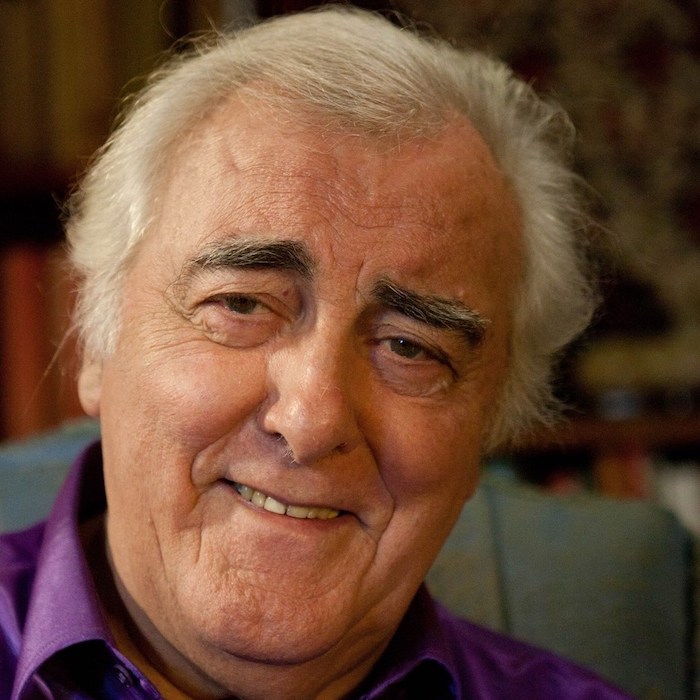
About Lance Lambert
Lance Lambert (1931-2015) was one of the most distinguished Bible scholars and speakers in Israel and had an itinerant teaching ministry worldwide.
Born in 1931, Lance grew up in Richmond, Surrey and came to know the Lord at twelve years of age. He later entered the school of African and Oriental studies at London University to prepare for work in China, studying Classical Chinese, Mandarin, Oriental Philosophy and Far Eastern History. However, the Chinese Communist Revolution closed the door to European missionaries and prevented his entry into China.
In the early 1950's Lance served in the Royal Air Force in Egypt and afterward fellowshipped with the Halford House Christian Fellowship in Richmond, England.
Later in life, Lance discovered his Jewish ancestry – his father and many members of his family had died in the Holocaust. This discovery led him to become an Israeli citizen in 1980, and he made his home next to the Old City of Jerusalem.
Lance Lambert's Eschatological Views and Israel
Lance became noted for his eschatological views (beliefs about end times), which place him in the tradition of Watchman Nee and T. Austin-Sparks. From his base in Israel, he produced a widely appreciated quarterly audio recording called the Middle East Update, which gave his unique perspective on current events in the Middle East in the light of God's Word. He wrote numerous books and was presenter of the video production, Jerusalem, the Covenant City.
Listen to Lance's Story: Hear Lance share his testimony here.