
Read the Transcript
The Lord Is in the Whirlwind and the Storm as Seen in Believers
Part 3: Richmond, VA; 2002
By Lance Lambert
If you will turn with me to the prophecy of Nahum, just the one verse that we've been considering, the Book of Nahum, in chapter 1 and verse 3:
The Lord is slow to anger, and great in power, and will by no means clear the guilty. The Lord hath His way in the whirlwind and in the storm, and the clouds are the dust of His feet.
You will turn to 1 Peter, the first letter of the apostle Peter, chapter 1, from verse 3:
Blessed be the God and Father of our Lord Jesus Christ, who, according to His great mercy, begat us again unto a living hope by the resurrection of Jesus Christ from the dead, unto an inheritance incorruptible and undefiled, and that fadeth not away, reserved in heaven for you, who, by the power of God are guarded through faith unto a salvation ready to be revealed in the last time, wherein ye greatly rejoice, though now for a little while, if need be, ye have been put to grief in manifold trials, that the proof of your faith being more precious than gold that perisheth, though it is proved by fire, may be found unto praise and glory and honour at the revelation of Jesus Christ, whom not having seen ye love, on whom, though now ye see Him not yet believing, ye rejoice greatly with joy unspeakable and full of glory, receiving the end of your faith, even the salvation of your souls.
And then I would like to add to that in the Gospel of Luke, Luke's gospel, chapter 22, from verse 31:
Simon, Simon, behold, Satan asked to have you, that he might sift you as wheat. But I have made supplication for thee, that thy faith fail not. And do thou, when once thou hast turned again, establish thy brethren.
And he said unto Him, Lord, with Thee I am ready to go both to prison and to death. And He said, I tell thee, Peter, the cock shall not crow this day until thou shalt thrice deny that thou knowest me.
And verse 54:
And they seized him and led him away, and brought him into the high priest's house. But Peter followed afar off. And when they had kindled a fire in the midst of the court, and had sat down together, Peter sat in the midst of them. And a certain maid, seeing him, as he sat in the light of the fire, and looking steadfastly upon him, said, this man also was with Him.
But he denied, saying, woman, I know Him not. After a little while another saw him and said, thou also art one of them. But Peter said, man, I am not. And after the space of about one hour, another confidently affirmed, saying of a truth, this man also was with Him, for he is a Galilean. But Peter said, man, I know not what thou sayest. And immediately while he yet spake the cock crew.
And the Lord turned and looked upon Peter. And Peter remembered the word of the Lord, how that He said unto him, before the cock crow, this day thou shalt deny me thrice. And he went out and wept bitterly.
And finally, in the Gospel of Mark, chapter 6, verse 45:
And straightway Jesus constrained His disciples to enter into the boat and to go before Him unto the other side, to Bethsaida, while He Himself sendeth the multitude away. And after He had taken leave of them, He departed into the mountain to pray. And when even was come, the boat was in the midst of the sea, and He alone on the land, and seeing them distressed in rowing, for the wind was contrary unto them about the fourth watch of the night, He cometh unto them walking on the sea. And He would have passed by them, but they, when they saw Him walking on the sea, supposed that it was a ghost, and cried out. For they all saw Him and were troubled. But He straightway spake with them and saith unto them, be of good cheer, it is I be not afraid. And He went up with them into the boat, and the wind ceased. And they were sore amazed at themselves, for they understood not concerning the loaves, but their heart was hardened.
Could we just have a further word of prayer? Beloved Lord, we're so thankful for this time that we have been in Your presence, sensing that You are here, and have been worshipping You, and opening up our hearts in love and adoration. And now, Lord, we come to Your word. And we need You both for the speaking of Your word and the hearing of it. And we know, Lord, that You have provided an anointing of grace and power for just that. So into that anointing grace and power so dearly won for us at Calvary by our Lord Jesus, we stand by faith, dear Lord. Make it a reality this morning, both in the speaking and in the hearing. We shall be careful to give You all the praise and the glory. Hear us, O Lord, for we ask this in the name of our Messiah, the Lord Jesus. Amen.
The Paradox of the Lord's Presence in Storms
It's a little too late to go over what we have said already. But it is this one little phrase in the prophecy of Nahum: The Lord hath His way in the whirlwind and in the storm. And the clouds are the dust of His feet. Quite extraordinary revelation, really. We tend to think that if the Lord is present, everything will be clear, shining, everything will be full of sunshine. We don't imagine that the Lord would be in a whirlwind or tornado. What a thing for the Lord to be in. So destructive, so powerful. In a single moment of time, it can blow away whole places.
Key Truth: We tend to think the Lord's presence means sunshine and clarity, but Scripture reveals He has His way in the whirlwind and storm. The clouds are the dust of His feet.
The Challenge: Learning to recognise and trust God's presence even in life's most destructive and chaotic moments.
A Personal Testimony of the Lord in a Tornado
I remember speaking some years ago, and I was asked to do so to a whole bunch of Southern Baptist ministers in Kentucky, Louisville. And I remember when I was speaking to them, they were quite hostile. I found it quite remarkable. I almost wondered why I'd gone. They didn't believe in prayer. They didn't believe the Lord Jesus was coming. These are Southern Baptist ministers. I was so shocked. I'd always thought Southern Baptists were fundamentalists, from the feet to the head and from the head to the feet. So I was very surprised that I found when you got amongst ministers, that many of them didn't believe even what we think is normal amongst Southern Baptists.
But there was one man whose face shone through the whole time. And afterwards he came up and he said, "Don't be put off by my brethren." He said, "Poor things, they haven't had any experience." So I said, "Oh, you've had an experience of the Holy Spirit, have you?" "Oh," he said, "not only that, but I've had a miracle." He said, "Did you know of the great tornado that went through here about two years ago or something like that?" And I said, yes, I did, because Mrs Sparks, Austin-Sparks's wife, was actually there at the time. And when she came back, she told us about this terrible thing. Three days without electricity and all the rest of it.
And he said, "Well, I was in the church and in the vestry. Suddenly, there was a noise such as I'd never heard. I dived under this oak desk. The whole church," he called it the church, never mind, "the whole church began to revolve. The whole thing went up and then fell. They dug me out after so many hours. I was under a solid oak desk. Then I realised that miracles were still God's business."
And it is so that sometimes, you see, the Lord came to him in a whirlwind. He was a Baptist minister who had no real experience of the Lord. He wasn't alive to the Lord. But when the Lord came in that whirlwind, the Lord truly was in it for him. He came out of it with a new experience of the Lord. He was a little later filled with the Holy Spirit. And that meant a whole new chapter for the fellowship he was leading.
I mean, I just mention it because it seems so amazing to us that the Lord should be in a whirlwind and in a storm. That He might come up behind it is what we could accept. That He might even go before it we could accept. But that He could be in it, that's very hard for us to believe.
The Lord's Purpose in National and Corporate Storms
And so I spoke on the first night about the nations. Whirlwind and storm in the nations and the fact that the Lord has a purpose and He's going to fulfil it. And it will be on time. It won't be late, it won't be before the appointed time nor after it. He's going to fulfil it. But I will say no more about that. We talked about that, that was the first night.
And last night I talked about it to do with the church. The Lord has to sometimes come in a whirlwind in order to blow people out of something false and compromised. He has to sometimes use storms to do it. And when it comes down, even to an assembly of born again believers who know something of the Lord, there is an evil day. When that evil day comes, you can't stop it. You cannot avert it, you cannot abort it. And in that evil day, everything is blown to pieces. It's all confusion. You can't see the Lord for the clouds. You can hardly believe that the clouds are the dust of His feet. In other words, He's there and He's actually working through it.
And in that time, we're all set at sixes and sevens. We are sort of brother against brother, sister against sister, everybody. It's a time when all the eyes get off the Lord and get on to one another. It doesn't matter who we are. We find fault everywhere. And actually that is true anyway. You see, when everything's going gloriously, the faults are all there, the weaknesses are all there. You just don't see them. But in the evil day, every fault, every weakness comes out, as it were, into the open. And if we want to fight, and we want to—we can do so. And the Lord in one sense leaves us to it.
I've always been a believer in this: that when you get two people fighting each other in the work of the Lord, the Lord says, "Get on with it. Fight." But when one person dies in it, the Lord says, "I'll take your place." Then they're on a collision course with the Lord. God help anyone who's on a collision course with Him.
The Individual in the Storm: Proving What Is of God
Well, anyway, now this morning I want to talk about the individual. There is a very great danger when we see what the church is, that we begin to put less and less emphasis upon the individual. But any assembly, its spiritual character, its spiritual power, its spiritual effectiveness depends upon the individual working of every part of the body.
When you have five people working and 90 spectators, you will not have effectiveness. When you have 20 people effective and 200 that are seat warmers, you will not have the same effectiveness. You can have 10 people with real character, and the rest are siphons, if you know what I mean.
So many assemblies and so much Christian work is filled with people who—they're like tape recorders. They take it all in and put it all out, but there's no character. It is something like machinery. But when God can get a company with a large number of them who really have experience of the Lord, who have their own personal knowledge of the Lord, to whom the word of God has been applied in their own situation, at home, at work, in their own life, you have a company that has spiritual character. You have an assembly that has spiritual power. The prayer meeting becomes a powerhouse.
And that's why, in my estimation, when the Lord sees an assembly or a work that really has understanding of the word of God and has real revelation about the church, but He begins to see people hiding in the quarter, He comes in a whirlwind. And in that moment when the fellowship we hide in breaks up or goes down or all kinds of things we never thought would ever happen happen, then suddenly we are individuals again. Do you understand? Then we have to think, do I really believe what I believe? That is the whole point of this, that I want to talk about this morning, this question of the individual.
Spiritual Character: The strength of any assembly depends on the individual experience of each member. When believers hide in the fellowship without personal spiritual character, God may use a storm to make them stand as individuals again.
The Question: Do I really believe what I believe, or am I simply sheltering in corporate truth without personal reality?
The Tabernacle as a Picture of Individual and Corporate Life
Do you remember the tabernacle? Do you remember how all the boards of the Tent of Meeting and the Holy of Holies, the boards were all individual boards? Do you remember that every single one of them sat on two feet? And do you remember that a bar went right through the lot of them and rammed them together? In other words, it's a picture of heavenly things. It's a picture of the house of God. It is a picture of the church of God, but every one of the boards is standing on its own two feet and then bound together in the house of the Lord.
The Purpose of Fiery Trials in Individual Believers
Well, the first thing I want to talk about this morning is proving what is of God in you. In 1 Peter, chapter 4, and verse 12, listen, and I will read it to you:
Beloved, think it not strange concerning the fiery trial among you which cometh upon you to prove you as though a strange thing happened unto you. But insomuch as ye are partakers of Christ's sufferings rejoice that at the revelation of His glory ye also may rejoice with exceeding joy. If ye are reproached for the name of Christ, blessed are ye, because the Spirit of glory and the Spirit of God resteth upon you.
He goes on:
For let none of you suffer as a murderer or a thief or an evildoer or a meddler in other men's affairs. But if a man suffer as a Christian, let him not be ashamed, but let him glorify God in this name. For the time is come for the judgement to begin at the house of God. And if it begin first at us, what shall be the end of them that obey not the Gospel of God? And if the righteous is scarcely saved, where shall the ungodly and sinner appear? Wherefore let them also that suffer according to the will of God commit their souls in well doing unto a faithful Creator.
Beloved, think it not strange. Think it not strange concerning the fiery trial among you. We should thank God we're not all the time in trial. But we should expect times when the Lord comes like a tornado. We should expect times when the Lord comes as a storm. Because it is in those times that the Lord proves whether what we believe up here is really in our heart.
You know, we can all say we believe the word of God, which I believe we do. But it's only when the trial comes that we hardly know where we are or what we're doing. And then the Holy Spirit takes some scripture and immediately that becomes yours. You know what I mean? You know, you've known that scripture all your life, some of you from Sunday school upwards. And it's wonderful. It's God's word. You believe it, but it's not yours. But in that moment when the storm hits you, you discover the Lord has His way in it. And you don't know where to turn. You are in distress, you're afflicted. But then into your heart the Holy Spirit breathes a word, you know. And in that moment, that word becomes yours.
A Testimony of God's Word Becoming Personal—Lady Ogle
I remember, I may have told you this story before, I remember years ago, when I was convalescing in Lady Ogle's home, her beautiful home in Kent overlooking the Ashwood Forest. And I remember I thought it was such a beautiful home. Everything about it. You know, those poor—she banned the cats from the whole, for so many acres they weren't allowed. And even the gardeners in their homes weren't allowed to have a cat, poor thing, because she loved birds. She didn't want a single cat that was going around killing birds, you see. So she loved birds. It was like heaven on earth, really, in many ways.
But I remember sitting in a drawing room, I saw the magnificent room and furniture, I saw this little plain wooden plaque on the wall. And it said, "My peace I give to you." And I thought, well, that's pretty trite. I thought to myself—I didn't say it to her, but I thought to myself—I think she could have found a deeper word to put on the wall.
A bit later we were talking and some days later, and I said, "Why have you put that little plain piece of wood up there on the wall?" "Oh," she said, "I was in terrible distress years ago. I was in terrible distress. I felt as if I really didn't know the Lord. Something had come into my life. She said it blew everything to pieces. And she said, I just didn't know where the Lord was. I didn't know where I was. And she said, in the midst of this distress that went on for quite a few days, suddenly one day the Holy Spirit breathed into my heart, 'Peace I leave with you. My peace I give to you.'"
And she said, "In a single flash, I understood the peace He left with me is the peace of sin forgiven, which He never knew. That's why He didn't call it My peace. He didn't need that kind of peace. He never sinned. 'Peace I leave with you,' it's your birthright because He has died in your place. But when He said, 'My peace I give to you,' it was the peace He had in Gethsemane when He said, 'Not as I will, but as You will.' It was the peace He had on the cross when He had said, 'My God, My God, why hast Thou forsaken me?' And then He said, 'Father, into Your hand I commend My spirit.'"
You know, it transformed her. And I felt so dreadful. I thought, oh, I'm so thankful I never said to her that trite little thing on the wall. You see, it was trite to me because I had never seen. It was just the kind of thing I saw in Christian homes. And I thought, not here as well. But then for her, it wasn't just a little scriptural saying that was plonked on the wall. It meant something. Actually, it was Amy Carmichael who herself had painted the words on the wood, for she was great friends of Lady Ogle.
So, I mean, you see what happens when it becomes yours. This fiery trial, don't think it's strange. The Lord is proving something. He is proving what there really is of Himself in you. How much is just up here and how much is here? It's the way the Lord brings us to a place where He means something to us, where He can produce in us spiritual character, of which there is a famine.
The Difference: Knowing Scripture intellectually versus having God's Word become personally real through trial.
Lady Ogle's Discovery: "Peace I leave with you" (peace of sins forgiven) versus "My peace I give to you" (Christ's peace in Gethsemane and on the cross—peace in the storm).
The Result: Scripture moves from the head to the heart, becoming truly yours through the Holy Spirit's work in the storm.
The Distinction Between the Acts of the Lord and the Ways of the Lord
We can run around being excited about miracles, and I have seen so many of all kinds. But we can run around and get all excited about miracles. They are the acts of the Lord, but the ways of the Lord, that's something in a different dimension. You can see the acts of the Lord and you can marvel and be excited about them. They're dramatic, they're sensational, they sort of encourage your faith. But the ways of the Lord, that is something altogether different. Many, many Christians know the acts of the Lord. Few understand the ways of the Lord.
When you're in this kind of process, it's so marvellous because at the revelation of His glory, you may rejoice with exceeding joy. What is the whole point of this whirlwind, of this tornado, of this storm? It is that the Lord may prove what is really of Himself in you. And then at the revelation of His glory, there will be no tears on your part except the tears of joy that you're there. It will be—you will rejoice with exceeding joy that in the whirlwind He did something, in the storm He did something in your life. He made real His word in you.
I could give you many other examples from my own experience and from others about how the word of the Lord, which we believe and we know is of God, as it were, given to us by the Spirit of God, yet somehow it's not in us. When the Lord makes His word real to you, it becomes yours in a way that is eternal. It somehow, it's yours. I can't explain what I'm saying, really. It's yours. It's yours in the way—it's not just in the book. It's not just absolute truth, it's yours. It's actually become flesh and blood. But never through sunshine, always through the whirlwind and through the storm.
The Proving of Faith More Precious than Gold
Then I take you in the same letter of Peter to chapter 1, which we have read together. In the Old King James, it's the trial of your faith being more precious than of gold that perisheth may be found unto glory and honour and praise at the coming of the Messiah.
You know, this is quite amazing to me because the word translated in the old version in English, "trial," is not a good word. When you have a trial, you are seeking to find out if it's true or not true. The trying—if you say the trying of your faith, it is: well, is it there or is it not there? Do you have living faith or do you not have living faith? Do you understand?
My version, which is the American Standard Version—aren't you amazed that I use the American Standard Version of 1901? But it so happens that that translation had more believers in those who were the translators than any other version in English other than of course the one man version, which is Darby. But the interesting fact is this: my version says "the proof of your faith," but that is also misleading. It is "the proving of your faith."
Let me read it again. It goes like this: That the proving of your faith being more precious than gold that perishes, though it is proved by fire, may be found unto praise and glory and honour at the revelation of Jesus Christ.
The proving of your faith. The Lord never puts you into a storm if He knows there is not living faith there. In other words, if your faith is so weak, He will not put you into the storm. He will wait till at least you've grown a little more.
Now listen, I will say something about it in one moment. But Peter was speaking out of his experience. Because when the Lord Jesus spoke to him, He said about what was going to happen, his fall, we might say. He said to him, "I have prayed for you that your faith fail not."
I would have thought three denials with oaths was a pretty clear indication of the failure of faith. Actually it was the failure of academic faith. But the real faith which was the gift of God was actually under the surface. And the Lord Jesus knew it. He said, "I have prayed that your God-given faith"—I am putting it in my own words—"may not fail." It didn't. One look from the Lord Jesus, it was all that was required. And Peter wept his way back to the Lord.
Trial vs. Proving: A trial seeks to discover if faith exists; the proving of faith demonstrates and refines the living faith that is already there.
God's Protection: The Lord never puts believers into storms unless there is genuine, God-given living faith present that can survive the testing.
The Purpose: To blow away self-manufactured Christianity and leave only what is truly of God—faith more precious than gold.
It is very, very interesting, this thing, the proving of your faith. The Lord is not sort of putting you into a storm so that you're blown to pieces. He puts you into a storm to blow away what is not of Himself. Second-hand Christianity, third-hand Christianity, fourth-hand Christianity—it's deadly. The Lord is only interested in original Christianity.
In other words, He is only interested in what has been produced in your life by His Spirit. Everything else, the storm will blow away. Whirlwind and storm. The wonderful thing is that if there is somewhere in your life that is the work of the Spirit of God, that kind of faith will survive. The Lord has proved it. He's actually proved it in the storm. You've lost everything else, but not what is truly of Himself. Now the Lord's got you where you ought to have been from the beginning. He's now got you on a basis of reality. He is now the Alpha and the Omega, the beginning and the end. Do you understand what I'm trying to say?
The end of the storm is that you have something more valuable, more pure than gold. Very simple. It's come through the storm.
Trusting in God Who Raises the Dead
Then again, I could turn you to yet another scripture, which is in 2 Corinthians, the second letter of the apostle Paul to the Corinthians, chapter 1. I will read from verse 8:
For we would not have you ignorant, brothers, concerning our affliction which befell us in Asia, that we were weighed down exceedingly beyond our power, insomuch that we despaired even of life. Yea, we ourselves have had the sentence of death within ourselves, that we should not trust in ourselves but in God, who raiseth the dead, who delivered us out of so great a death, and will deliver on whom we have set our hope that He will also still deliver us.
Here was a storm. These men were servants of God. They were actually fulfilling their calling. They were travelling, I imagine, where they didn't want to be. It would have been much easier, I imagine, to have stayed in a much more comfortable place. But here they were. And you would think the Lord would shine out of a clear sky upon them. You would think that the Lord would do something very special. But instead we hear: we despaired of our life.
He says in verse 8, "We would not have you ignorant, brethren, concerning our affliction. We were weighed down exceedingly," he says, "beyond our power." Now, the Lord doesn't surely do that, does He? Does He really weigh us down beyond our power?
Actually, Paul was, if we believe the only account we have of his size and shape, he was red-haired and short. In fact, the record, the only record we have says he was bow-legged. But he was a bomb. I mean, those of you who know anything about temperament, he was a choleric from beginning to end. He was a tank. Once he got something, he went right through. And the Lord knew it and thought, oh, this man, once he gets going, he'll do a whole lot himself. So every now and again, this faithful man who had lost really everything and laid down his life, the Lord had to say, "A storm. We're going to have to have the whirlwind come on him. It's the only thing that will preserve him and deliver him from his own power, his own energy, his own talents, his own brain."
Weighed down exceedingly, insomuch that we despaired even of life, we had the sentence of death within ourselves, that we should not trust in ourselves but in God who raises the dead.
Dear brothers and sisters, all of God's work begins with resurrection. It's all, if you know what I mean, on the other side of the grave. And that's something that the natural man cannot get to naturally. In other words, if you have to minister in your own power, with your own talents, you have to be on the other side of the cross. Do you understand what I mean?
The Application of Resurrection Life to Every Believer
So the Lord says He has a way of dealing with this. Do you want to serve the Lord? If you're a housewife, do you really want to serve the Lord? Do you want your family to be an expression of the Lord Jesus? A home where the Lord Jesus is at home?
Those of you who are businessmen, do you really want to have a testimony in business? Not easy to have a testimony in business. Do you really want to have a testimony in business? Do you really want the Lord to be seen in your life in business? You want to be a witness to Him in your business?
Those of us who are called to the ministry in one way or another, how can we really speak the word of God? The church is cluttered with people who speak the word of God. But there's no power. Nothing ever happens. It's up here, not here.
I remember a brother saying to me, "I went to Bible college or the theological seminary for five years." No, I think it was four years. Four years is enough. It's enough, unfortunately, to kill living faith. But it doesn't kill the person, unfortunately.
Now that's exactly what the apostle Paul is talking about when he says, "I have been—we, myself, my co-workers, we've been called by the Lord, and something hit us beyond our power." That's saying something with the apostle Paul. Beyond our power, insomuch that we despaired of life itself. But he says, "We had the sentence of death within ourselves." So that's what the Lord was doing, "that we should not trust in ourselves, but in God who raiseth the dead."
In other words, if all the work of the Lord is on the other side of the grave, if you understand what I mean, begins with resurrection power, resurrection life, then we have to not trust in ourselves, but in God who raises the dead. Then it is a walk of faith. And then it becomes something alive. It may be death in you because you have the sentence of death within yourself, but those who hear, it's all life. Does it make sense?
Paul's Experience: Pressed beyond his considerable strength to the point of despair, receiving the sentence of death within himself.
God's Purpose: That he should not trust in himself but in God who raises the dead.
The Principle: All of God's work begins with resurrection—on the other side of the grave. Ministry in our own strength is powerless; only resurrection life produces true spiritual fruit.
Comforting Others with the Comfort We Have Received
And then you can comfort people, you can encourage people with the comfort you yourself have received when you were pressed beyond measure. It's very easy to say to God's people, to try to encourage them, to try to comfort them. But when you have not been in a situation that this person may be in, how can you comfort them? But when you have been in that kind of situation where everything seems to be in the hands of the enemy himself, and then the Spirit of God encouraged you in it, when the Spirit of God comforted you—because if you read in the earlier verses, you will see it is the God of all comfort—then He comes to you, and now you have something to give those who are in trouble.
In the way that the Lord has spoken to you and the way the Lord has made His word live to you, in encouraging you, in comforting you, in strengthening you, in correcting you, you can now pass on to others. One person can speak words and another person the same words, and they live in [one person and not the other]. What is the difference? One person is speaking out of theology and the other person is speaking out of experience, the proving of your faith.
Peter's Experience: The Sifting of Self-Made Faith
And then a second thing I would just like to touch on—I've already said a little about it—is what we have in Luke 22. What Peter wrote about the proving of your faith in his first letter came out of experience. He actually knew from his own experience what the proving of faith really was.
The True Character of Peter
Peter was so special. I've often heard Peter, if you know what I mean, run down in the pulpit, you know, the kind of thing you've heard again and again. Oh, this man—arrogant, impetuous, always putting his foot in it, as we say, opening his mouth and putting his foot in it. You know, this man, actually, if you look carefully at the record, you will discover all the others felt exactly the same. But Peter was the one who was the spokesman. He always had no fear. Peter was a rugged kind of person, had no fear, whereas the others kept their big mouths shut and never got blamed.
You know this, we see it all in Christian work. It's someone who says something straight out, and the others feel it, but when it comes to crunch they all sew up their mouths and let brother so-and-so get all the trouble. The fact of the matter is Peter was a very straightforward, a very honest man. But he also had an idea that he could do it. It's as simple as that. He had no idea that his Christianity, if you know what I'm talking about, his discipleship was self-manufactured. It was the product of his own nature.
The Collapse of Self-Manufactured Faith
He heard the Lord and then he sort of, he took it into himself, and as it were he made himself what he felt he ought to be. This was the man who said, "Thou art the Messiah, the son of the living God." And Jesus said, "Simon Bar-Jonah, that's not something that's from you—that's been revealed to you by My Father who is in heaven." I mean, there were some very good things about Peter. He did follow the Lord.
He didn't seem to have a very good home life because you'll remember on one occasion he was so excited when the Lord said about leaving father and mother and husband and wife, you know, and following Him. And he said, "Oh, well this sounds like something good." You remember that? It's in the word. And you know they always were saying they didn't like little children coming, "Take them out." It's a very interesting little sideline.
Peter actually had a self-manufactured Christianity and a self-manufactured Christian service. There's no doubt about his loyalty, there's no doubt about his aims, no doubt about his determination to follow the Lord. But it wasn't the Lord.
Now you might say I don't understand what he's talking about. Oh, you will. When the tornado hits you, as it will if you go on with the Lord, you will understand what I'm talking about. Because in that moment that Peter said, "I am ready to go to prison with You and to die with You," Jesus said, "Before the cock crow once this day, you will have denied Me thrice."
Now Peter must have been dumbstruck. "How could the Lord misjudge me in such a way? It's absolute nonsense. I mean what I say." And then the Lord said to him, "Listen, Simon, Simon, Satan has obtained you by request."
Satan's Role in Sifting and God's Purpose
How could he be a child of God and Satan obtained him by request? Thank God, Satan couldn't just take him, he had to get permission from God. But Peter by speaking too quickly had exposed himself, and Satan had gone to God—believe it or believe it not—and said to the Father, "You let me have him. I'll sift him."
C.T. Studd said the devil was a great servant of God because every time the Lord wanted to do something, He used the devil sometimes to do it. Do you understand what I'm trying to say? So the Father said, "You do it," and Satan did it. Here is the interesting thing: Satan got the chaff and God got the wheat. Satan was the agent, but he divided the chaff from the real grain.
So much of our Christian life and Christian service is actually so much chaff, but we don't know it. Buried within it, deep within it, is the real thing. But when the storm comes, the chaff is blown away and the wheat remains. And so to me, it is amazing. Why does Satan do this when he knows every single time he gets the chaff and God gets the wheat? It says something for the pride and arrogance of Satan that he honestly believes that he could really frustrate the work of God.
Anyway, I hope you understand what I'm trying to say. Peter's whole Christian life collapsed in a single moment of time. Can you believe it? That this man who said, "Thou art the Christ, the Messiah, the son of the living God," denied his Lord three times? The other gospels say with oaths. There could have not been anything more devastating than what happened to Peter that night.
The Sifting Process: Satan obtained permission to sift Peter as wheat. Satan got the chaff (self-manufactured faith), God got the wheat (genuine God-given faith).
Peter's Problem: His Christianity and discipleship were self-manufactured—the product of his own nature, not truly of God.
The Result: Everything false collapsed, leaving only what God had genuinely given—living faith that would sustain him for life.
The Power of a Little Maid and the Collapse of a Strong Man
Here was this great rugged, masculine type, a kind of spiritual Schwarzenegger. And a little servant girl comes, probably just in her mid-teens, and she says, "Oh, you're one of them." And instantly—it's amazing what women can do to men. It is amazing. I mean it. That little painted woman with her nails beautifully done, brilliantly scarlet, and her eyes with mascara, tiny little thing that the wind could almost blow away. Her name was Jezebel. And all she had to do was write a little note and send it to Elijah. And the man fled for his life, this great rugged man.
You've only got to see the country in which Elijah lived to know the man was an incredible man. He fled for his life. You remember the story, don't you? And you remember how the Lord didn't try to stop him. Not once did the Lord try to stop him. In fact, the Lord said to a couple of angels, "Get down there, cook his breakfast. He says he doesn't want to live." And the Lord helped him go in the wrong way.
And then, you know, you sleep in our part of the world during the day. Some folks all night and all day. But I mean, he was sleeping under a juniper tree. And so the angel actually cooked his breakfast and cooked his supper. And in the strength of that food he went 40 days and 40 nights. It's an unbelievable story, isn't it? And the Lord never once tried to—if I imagine the Lord speaking, He would have said, "Don't try and stop him. No, he is so churned up and the thing is—we'll get him at the other end." And when he finally got to the very southern tip of the Sinai, then the Lord met him. Remember? "What are you doing here, Elijah?" Marvellous, isn't it?
And it was a little woman that sent him on his journey in the wrong direction. Who could believe such a thing? This man who had seen 400 prophets of Baal on the Mount Carmel and in the great contest with them, saw such a triumph before the whole people of Israel. Before this one little painted wisp of a woman, he fled for his life.
Well, same with Peter. This little girl, I don't think she would have had painted nails or mascara or anything like that. Just a dear little girl. And all she had to say was, "You're one of them." And the man collapsed. And then again some servant, I don't know who he was, some fellow came and said also, and then another one. Three times he said it. And then as he was denying the Lord the third time the cock crew.
The Look of the Lord and Peter's Restoration
And instantly into Peter's heart came the words of the Lord Jesus. And it says something remarkable that Jesus just looked. He didn't need to say anything. He never spoke a word. He just looked. And when Peter's eyes and the Lord's eyes met together, suddenly Peter realised. Judas wept himself into suicide. But Peter wept himself back to the Lord.
You know, in our service for God it is a sad thing if we don't have a whirlwind and a storm. Because then we go on with our natural energy, with our academic understanding and with everything else. And it's not really the Lord and we ourselves are deceived. I imagine Peter for the rest of his life thanked God for the proving of his faith. For deeper than his denial was a God-given faith. And when this storm came, this whirlwind hit him, it blew everything in his life away and left him with only what God had given him: living faith. Now he was on another level, on another basis from now.
Anyway, I mention it all because I think it is so tremendous.
Two Storms on the Sea—Lessons in Faith
And then I must finish. Today, I can see the clock. Did you notice that scripture in Mark that we read together? Interestingly, there is another story. I give both of them because they're so interesting. We only read one of them. In Mark 4, both the stories—of course, liberal [scholars] tell us they're the same story that got warped and some foolish scribe shoved them in together.
I don't think so at all. The first story, you have a boat, you have the disciples, you have Jesus, and you have a storm. And the second story, you have a boat and disciples, and Jesus not in the boat this time, and a storm.
The First Storm: Jesus in the Boat
In that first instance, you remember, Jesus got into the boat and went fast asleep. And we're often told that this is His humanity, you see. He was a human being, just like us, and He was weary. I do not believe it. I have no doubt about the humanity of the Lord Jesus. No doubt that He was subject, like we are, to weariness and other things. But I cannot accept that He did not wake up in a storm. I believe He sat there with His eyes closed.
And don't say that this doesn't happen, because I remember Mr Sparks. I remember on one or two occasions when he didn't want to see a visitor and I was in the room, he shut his eyes and said, "Don't say anything." And they would say, "Oh, he's asleep," they would say, "he's asleep." I didn't dare say yes, but I sort of just looked, and out they went. And then one eye would open.
So I believe that the Lord—I'm not saying He's being deceitful, but what I believe is that He was doing something as a means of instruction. He looked as if He was fast asleep. And the dear old disciples said, "Oh, he's so tired." When this storm hit the boat—by the way, those of you who have been to Israel will have seen the Lake of Galilee, and you will always—I get questioned again and again about it. The people who've been there, say, "It's so peaceful! How come there could be storms where boats sank?"
But the thing that hits the Galilee are called whipwinds. Like a whirlwind, it comes down the hills, the mountains, and hits the sea and stirs it into a great white whirlpool. And Jesus was in the boat. He was asleep. The disciples said, "Oh, poor thing, he's really tired. Don't disturb him." And they bailed out the water and out the water. I don't know who it was who finally got sort of tired of the whole thing. "Look, we forgot to tell Him. I mean, maybe He can do something. We're going to go down."
And so they went and shook Him and said, "Don't You care? We're about to go down." And the Lord got up and He saw the panic-stricken disciples, went to the prow, I suppose, of the boat and He said, "Be still, shh." And instantly the storm stopped.
Of course the disciples were thrilled. "This is absolutely wonderful. Who is He that He can speak a word, not just a long thing, but just a word and the whole thing is over?" It's so wonderful in our lives when the Lord steps in in the storm and stops it. Because the Lord is so sensitive and so thoughtful to His children that when we start to panic, He knows there's no way we're going to learn anything. And so He says, "shh"—and it's gone. And then we say it was a miracle. It was a miracle.
You've learnt something. You've learnt how great the Lord is, how authoritative the Lord is, how He can stop a storm in an instant. You've learnt something. But you haven't learnt enough.
The Second Storm: Jesus Not in the Boat
Now, I know some people think I'm a heretic on this matter, but I have suspected for many, many years that the second story is the same thing, but not the same time. I mean that it's another account, but it's another incident on the sea. But this time Jesus said, "Well, he didn't learn the last time. This time I'm not getting in the boat. They're not going to get Me another time like this."
And so He stayed up and went up and said, "I'm going to pray." And they all got into the boat without the Lord. He said, "I'll meet you on the other side." But they knew that He had His own ways of doing things, how He was going to go right round and meet from the other side. I suppose they might have thought, how's He going to do it? But they'd been with Him long enough to know that if He said He was going to meet them on the other side, somehow miraculously He'd be there.
And then a huge storm blew up. In the other gospel it tells us that they were also afraid because suddenly they saw a figure moving in the spray and the huge wind and the great waves. And they were rowing so hard against the wind and they thought it was a ghost.
Do you know, we're all very superstitious when it comes to it. They thought, "It's a sign, it's a sign. Someone's come from the underworld, we're all going down." But Peter says—so one of the other gospel says—"No, I think it's Jesus." And he called out in the roar of the storm, he called out, "Jesus, is it You?" And back through the storm came the voice of Jesus, "Yes, it's Me."
Peter Walking on Water: The Greater Lesson
Then Peter said, "If it's You, tell me to come to You." And Jesus said, "Come." And then Peter got over the side of the ship, put his feet down on the water and started walking. He never once thought to himself, "What am I doing?" He'd never been to Bible school to learn how to walk on water. It's incredible. He began to do the impossible.
Of course, some of our Bible critics—including some theologians—tell us, and I heard it with my own ears from one of them, that there are potholes in these shelves on the Lake of Galilee. And Peter was actually walking in shallow water. And when he fell, he fell into a pothole. And Jesus sort of yanked him up. I mean, it's silly, really, frankly. How was the boat going down in such shallow water? I mean, they don't think. You know, it's incredible. It's like one of these terribly—you know, the limitation of intelligence is incredible. Only living faith releases you from the bondage of intelligence.
And I mean, the interesting thing really is that I heard another one who said, "Well," he said, "of course, Elijah was on Mount Carmel, and of course," he said, "we know that there are benzene wells on Mount Carmel. He said, "He was clever. That water that he was pouring into the trench wasn't water at all. It was benzene." And some of these students also—and when he finished in question time, I was only a kid then—I mean, you know what I mean by a kid—I said, "Excuse me, where did the fire come from?"
"Fire?" he said, "The fire?" I said, "You know, the fire that came down." Because he said about it, "You've never seen fire licking up water. But benzene," he says, "it licks it up." Well, I said, "Where did the fire come from?" "Fire? Fire?" he said, as if he'd never thought about it. And I said, "Maybe it was the cigarette that Elijah was smoking." It's so stupid. These sort of wonderful answers to miracles are so stupid that the only way you can answer them is by that kind of comment.
Now, let me just say something. I believe Jesus did not get into that. When Jesus said, "Come," Peter saw the Lord. Peter heard the Lord and he did the impossible. He walked on a wind-whipped sea. The wind was so colossal, so noisy, that it is amazing. Somewhere as he walked on the water, a wave came up and he couldn't see the Lord. And in that moment, he thought, "What am I doing? I'm walking on water. Am I dreaming? Is this real?" And in that moment, he began to sink. And Jesus said to him, "Why did you doubt?"
The Critical Difference Between the Two Lessons
Now listen, what is the lesson? The lesson is this: To have the Lord stop a storm in your life is wonderful. It leaves you with an understanding of His authority, of His greatness, of His power. It doesn't do anything to you. But when you walk on a storm-tossed sea and learn how to walk on a storm-tossed sea, this is another thing altogether. You will never again be afraid of a storm.
You have learnt how with the Lord Jesus, through living faith that comes by seeing Him, hearing Him and obeying Him, you have learnt you can walk through a storm-tossed sea. It cannot destroy you.
That, I say, is a great lesson. And out of that will come so much for every one of us if we learn this thing. You will have a knowledge of the Lord you could not get in a Bible school or in a Bible study. You have an experience of the Lord now, a knowledge of the Lord that is absolutely real, absolutely direct. It doesn't mean that you will not sometimes fear. But you know that somewhere in this storm there is the Lord. And the Lord is saying to you, "Come, follow Me, even in the storm." You understand?
First Storm Lesson: Jesus in the boat stops the storm—teaches His authority and power over circumstances.
Second Storm Lesson: Jesus not in the boat, Peter walks on water—teaches how to walk through storms by keeping eyes on Jesus.
The Greater Truth: Having the Lord stop a storm is wonderful, but learning to walk through a storm-tossed sea by faith means you will never again be afraid of storms.
Conclusion
May the Lord help us and bless us. May we learn in a way that we have never learnt before that His way—the way of the Lord is in the whirlwind and in the storm. And the clouds are the dust of His feet.
Shall we pray? Lord, we all need to learn lessons from You. But Lord, our prayer this morning is that You will make this a living reality in every one of our lives. Help us, Lord. We don't ask for any experience that will take us through a kind of destruction. But Lord, You know us. And You know when the time has come that something has to be done to divide the chaff from the wheat. And beloved Lord, our prayer is that we may learn how to trust You, how to follow You, and how to do the impossible.
Hear us then, O Lord, and make these little times we've had together a very real meeting with Yourself. We ask it in the name of our Lord Jesus. Amen.
Frequently Asked Questions
What does it mean that the Lord has His way in the whirlwind and storm?
This means that God uses difficult circumstances, trials, and storms in our lives not to destroy us, but to accomplish His purposes. He is present and working even in the most chaotic and difficult times, proving what is truly of Himself in us and removing what is self-manufactured.
What is the difference between the proving and the trial of faith?
The trial of faith seeks to discover if faith exists, while the proving of faith demonstrates and refines the God-given faith that already exists. The Lord never puts believers into a storm unless there is genuine living faith present. The storm blows away self-manufactured Christianity and leaves only what God has truly given.
How did Peter's denial prove his faith rather than destroy it?
Peter's denial exposed his self-manufactured Christianity and self-confidence. However, beneath his failure was genuine God-given faith. When Jesus looked at Peter after his denial, Peter wept his way back to the Lord. The storm of his failure blew away everything false and left him with only what God had given—living faith that would sustain him for the rest of his ministry.
What is the significance of the two storms on the Sea of Galilee?
In the first storm, Jesus was in the boat and calmed the storm, teaching the disciples about His authority and power. In the second storm, Jesus was not in the boat, and Peter walked on water toward Him. The first taught about God's power to stop storms; the second taught how to walk through storms by keeping eyes on Jesus. Learning to walk through a storm is greater than having the storm removed.
Why does God allow fiery trials for believers?
God allows fiery trials to prove what is genuinely of Himself in believers' lives. These trials separate the chaff from the wheat, exposing what is self-manufactured versus Spirit-produced. Trials make God's Word personally real rather than merely academically known, producing spiritual character and preparing believers for future ministry to others who will face similar difficulties.
November 3, 2001 | Page Updated Dec 2025
Richmond, Va
Summary
God works through life’s storms to prove what is genuinely of Him in believers, blowing away self-manufactured Christianity and leaving only the authentic faith He has given. Through trials, God’s Word becomes personally real rather than merely academic, transforming believers from relying on their own power to trusting in the God who raises the dead.
Main Verses
Nahum 1:3 – “The Lord hath His way in the whirlwind and in the storm, and the clouds are the dust of His feet”
1 Peter 1:6-7 – The proving of faith being more precious than gold, tested by fire
1 Peter 4:12 – “Beloved, think it not strange concerning the fiery trial among you”
Luke 22:31-32 – “Satan asked to have you, that he might sift you as wheat. But I have made supplication for thee, that thy faith fail not”
2 Corinthians 1:8-9 – Weighed down beyond power, “that we should not trust in ourselves but in God who raised up the dead”
Mark 6:45-51 – Jesus walking on the water and Peter’s attempt to walk to Him
About Lance Lambert
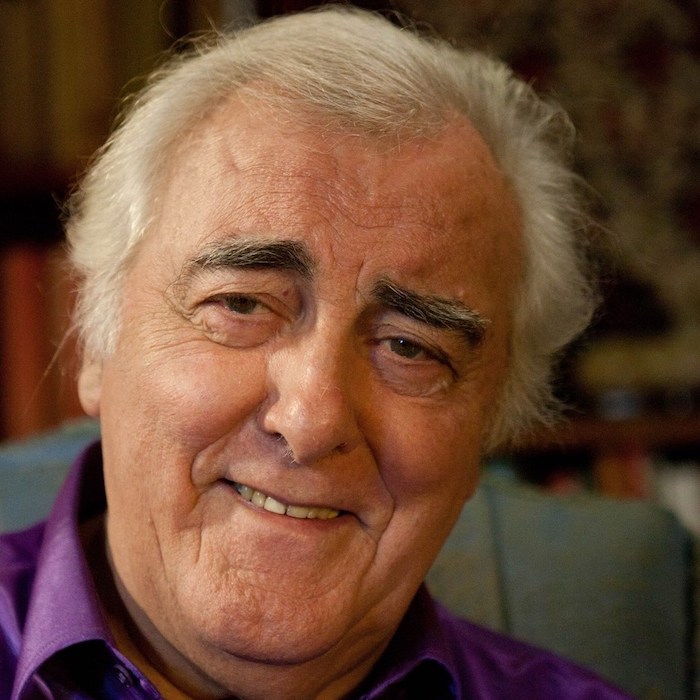
Lance Lambert (1931-2015) was one of the most distinguished Bible scholars and speakers in Israel and had an itinerant teaching ministry worldwide.
Born in 1931, Lance grew up in Richmond, Surrey and came to know the Lord at twelve years of age. He later entered the school of African and Oriental studies at London University to prepare for work in China, studying Classical Chinese, Mandarin, Oriental Philosophy and Far Eastern History. However, the Chinese Communist Revolution closed the door to European missionaries and prevented his entry into China.
In the early 1950's Lance served in the Royal Air Force in Egypt and afterward fellowshipped with the Halford House Christian Fellowship in Richmond, England.
Later in life, Lance discovered his Jewish ancestry – his father and many members of his family had died in the Holocaust. This discovery led him to become an Israeli citizen in 1980, and he made his home next to the Old City of Jerusalem.
Lance Lambert's Eschatological Views and Israel
Lance became noted for his eschatological views (beliefs about end times), which place him in the tradition of Watchman Nee and T. Austin-Sparks. From his base in Israel, he produced a widely appreciated quarterly audio recording called the Middle East Update, which gave his unique perspective on current events in the Middle East in the light of God's Word. He wrote numerous books and was presenter of the video production, Jerusalem, the Covenant City.
Listen to Lance's Story: Hear Lance share his testimony here.